BLOGGER TEMPLATES AND TWITTER BACKGROUNDS �

Sunday, April 3, 2011

INDIAN ANTI TANK WEPON HELINA TESTED SUCCESSFULLY


India's Defence Research & Development Laboratory (DRDL) plans to extend the range of the HELINA (Helicopter-mounted Nag) anti-armour missile into a >20-km range strike munition. HELINA project director KS Vara Prasad has indicated that his team is building a "miniaturised inertial navigation package" to enhance the existing weapon without adding weight or too much cost.

The HELINA, an air-launched variant of the Nag anti-tank missile, has a range of 7-km and has been captive flight-tested, with a scheduled first firing for later this year. The programme director has also revealed that a feasibility study is officially on to integrate the HELINA onto the Rustom-H MALE UAV. More details soon.
India's Defence Research & Development Laboratory (DRDL) plans to extend the range of the HELINA (Helicopter-mounted Nag) anti-armour missile into a >20-km range strike munition. HELINA project director KS Vara Prasad has indicated that his team is building a "miniaturised inertial navigation package" to enhance the existing weapon without adding weight or too much cost.

The HELINA, an air-launched variant of the Nag anti-tank missile, has a range of 7-km and has been captive flight-tested, with a scheduled first firing for later this year. The programme director has also revealed that a feasibility study is officially on to integrate the HELINA onto the Rustom-H MALE UAV
 

INDIAN NAVY ISSUED REQUEST INFORMATION FOR 50 UTILITY HELICOPTERS


India's navy has issued a request for information for at least 50 light utility helicopters to replace its fleet of Hindustan Aeronautics Chetaks.


The service is seeking a new fleet of twin-engines aircraft, with bidding companies to be required to undertake field evaluation trials in India. Interested vendors must also provide information on how they plan to comply with India's 30% offset rule, the navy says in its tender document.
 To meet its requirements, the selected light utility helicopter must have an all-up weight of not more than 4,500kg (9,920lb) and be capable of carrying at least one lightweight torpedo or two depth charges, the RFI says. There should also be a provision for mounting 12.7mm machine guns and/or a rocket launcher on either side of the aircraft.
 The helicopter must also be able to carry at least four passengers and come with rappelling equipment, rescue winches and be capable of carrying underslung loads.

Other roles for the new aircraft will include search and rescue, casualty evacuation, limited observation and surveillance and anti-submarine warfare tasks, as well as anti-piracy and anti-terrorism activities, the navy says.

The RFI document fails to provide a delivery timeline, but asks vendors to give the earliest schedule possible.

India's current Chetak design was licence-built by HAL, and is a version of the Eurocopter SA316B Alouette III. The aircraft has a maximum take-off weight of 2,200kg, according to HAL.

Flightglobal's HeliCAS database lists the navy as having an active inventory of 32 of the type.
Indian Navy is looking to acquire six to eight Medium-Range Surveillance Aircraft and High Altitude Long Range UAVs. Defence Ministry floated RFIs (request for information) for the surveillance aircrafts and UAVs newspaper reports indicated. Specifications for the Medium-Range Surveillance Aircraft require an operating range of over 350 nautical miles while the requirements for the UAV are service ceiling above 40,000 feet and endurance of over 25 hours.

These come in the aftermath of the 26/11 Mumbai Terror Attacks where Pakistan based terrorists used the sea route to reach Indian soil. India is also conducting a major upgrade for the Coast Guard.

Saturday, April 2, 2011

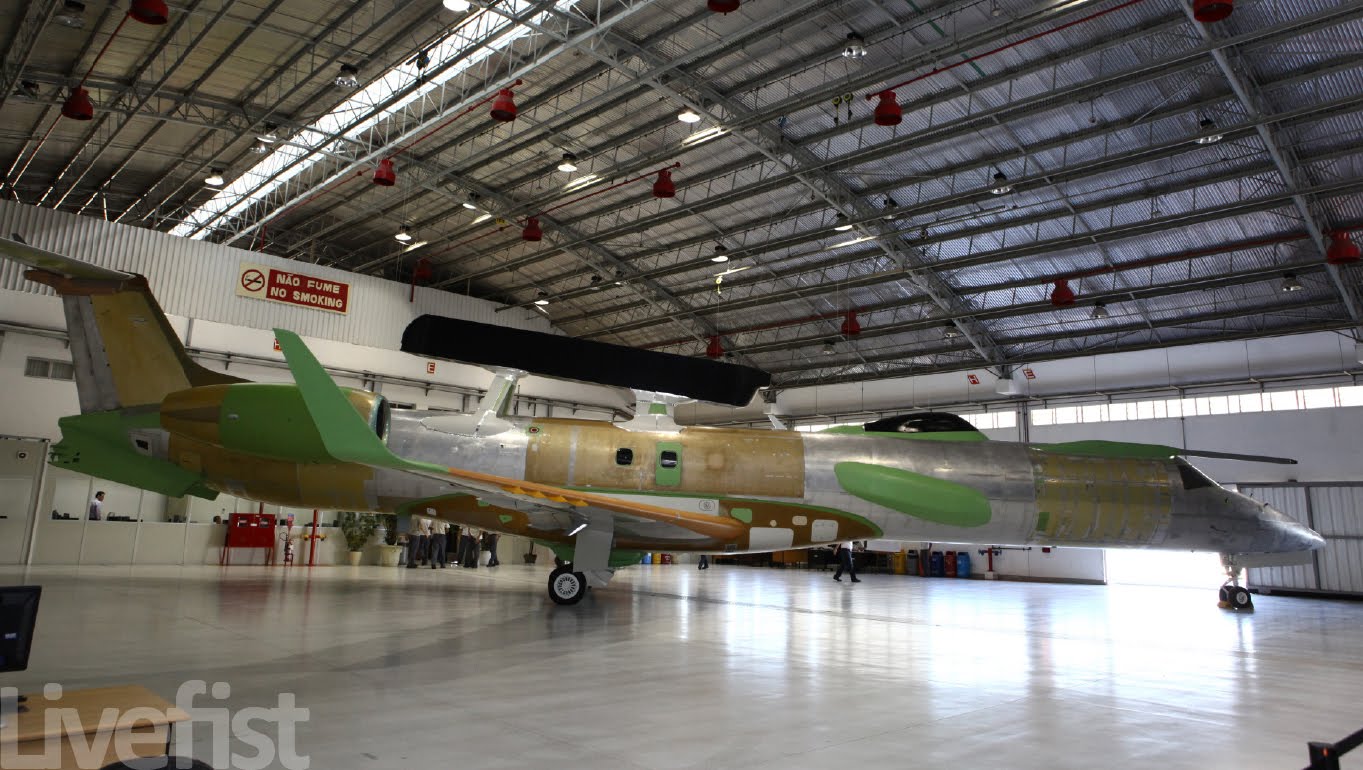
INDIAN AWACS (AEW&C)SYSTEM TESTED SUCCESSFULLY


The Rs 1800-crore programme, taken up by Defence Research Development Organiastion (DRDO), was first sanctioned in 2004 but suffered delay due to various reasons.

The roll out ceremony was witnessed by Dr VK Saraswat, Scientific Advisor to Defence Minster, Dr Prahlada, CC R and D (Ae and SI); Dr S Christopher, Director, CABS; Air Marshal Daljit Singh, AVSM, VM, DG(AO), IAF and many senior officials from Indian Embassy and M/s Embraer, a DRDO release said today.

Country's own AWACS system, named Airborne Early Warning and Control System (AEW and C), will be built on a modified Embraer EMB-145 aircraft.
EMB-145I aircraft modified for AEW&C System rolled out at Embraer, Brazil on 21 Feb 2011. The roll out ceremony was witnessed by Dr VK Saraswat, SA to RM; Dr Prahlada, CC R&D(Ae & SI); Dr S Christopher, Director, CABS; Air Marshal Daljit Singh, AVSM, VM, DG(AO), IAF and many senior officials from Indian Embassy and M/s Embraer.

Based on the Embraer ERJ 145 regional jet, the aircraft features an in-flight refueling system, SATCOM capability, a significant increase in electrical and cooling capacities, and a comprehensive set of aerodynamic and structural changes. These improvements will allow the installation of the advanced electronic systems currently being developed by India’s Defence Research & Development Organisation (DRDO) under CABS (Centre for Airborne Systems) coordination.


Following its official presentation, the aircraft will start intensive ground and flight tests. The ferry flight to India is scheduled for the second semester of this year, where it will receive the equipment being developed by the DRDO.

Today, four Embraer Legacy 600 jets are operated by the Indian Air Force (IAF) for the transportation of Indian VIPs and foreign dignitaries, and a fifth Embraer Legacy 600 is in service with the Border Security Force (BSF), under India’s Home Ministry.

Friday, April 1, 2011

NEW MULTI ROLE TRANSPORT AIRCRAFT WILL BE READY SOON FOR INDIA

Mr Vladimir A Belyakov, Deputy Director General of the United Aircraft Company (UAC), told India Strategic after the signing of the bilateral agreement between the two countries on producing this medium category twin-engine aircraft that it should take about a year to do the preliminary design and another one and a half years to do the detailed design.
The first flight of the aircraft could be held in about seven years, say 2017 and regular production a couple of years later.
Mr Belyakov, who headed the Russian delegation at the signing ceremony Sep 9, said that the MTA would be a typical military aircraft, capable of short landings and takeoffs and ferrying 80 fully equipped troops, or infantry fighting vehicles like the Soviet origin BMPs and equivalent western systems, artillery pieces and ammunition and also for executing battlefield medical evacuations.
The aircraft would also be useful in natural disaster relief missions.
It would be designed to replace India’s 100-plus Soviet vintage AN 32 aircraft, which are now under overhaul and upgrades in Ukraine. The first AN 32 had arrived in India in 1984.
Mr Ashok Nayak, Chairman of the Hindustan Aeronautics Limited (HAL), headed the talks and the signing ceremony from the Indian side. The two countries have pooled in $ 300.35 million each to develop the aircraft.
Mr Nayak told India Strategic that India would acquire 45 aircraft while Russia 100. There would be scope for exporting this aircraft, and the plan is to produce a total of 205 aircraft.
But significantly, the two countries would share the design and production responsibilities also on 50:50 basis.
The aircraft will have a glass cockpit for electronic instrument displays, fly by wire controls, full authority digital engine control (FADEC) engines, 800 kmph cruise speed, and a range of 2500 km. The service ceiling would be 12 km.
India’s Cabinet Committee on Security (CCS) cleared the contribution for HAL in August while the Russian government had done this earlier for giving its share through the UAC and Rosoboronexport (ROE), the latter being the sole state-run arms trading Russian company.
Asked if the aircraft would carry any prefix like IL or Ilyushin, Mr Belyakov said that the company would be called MTA Ltd, and the aircraft also simply as MTA.
The joint company would be based in Bangalore.
The Charter documents were signed by Mr N C Agarwal, HAL’s Director Design and Development, and from the UAC side by Mr Velmo Zhkin Sergey.
It may be noted that Russia has maintained its traditional Soviet days lead in supplying military aircraft to India. Over nearly last one and half decades, it has won orders for supplying nearly $ 20 billion worth of aircraft, systems and support elements including maintenance and upgrades for 272 SU 30 MKI combat jets, 139 Mi 17 V5 helicopters, and upgrades for SU 30 as well as old Mig 21bis and Mig 29 aircraft.
The two countries had signed the Inter-governmental Agreement for the MTA project in November 2007 after a visit of Defence Minister A K Antony to Moscow.


Images Copyright Ilyushin


The IRKUT Corporation proudly presents the programme of the Indo-Russian Transport Aircraft. The international project on joint development, production and sales of twin-turbofan Tactical Transport Aircraft envisions solidary cooperation of the Hindustan Aeronautics Limited (India), the IRKUT Corporation and the Ilyushin Aviation Complex (Russia), with their design teams to be merged into a virtual enterprise. 

The programme of Tactical Transport Aircraft development will significantly broaden the horizons of Indo-Russian military-technical cooperation. While implementing this innovative programme, Russian and Indian engineers will acquire invaluable experience and expertise in joint creation of the top-of-the-line aviation product. 

For the first time, the airlifter is being co-developed by both countries on a parity basis without governmental financing with the project's cost of nearly USD 300 … 400 mln. The IRKUT Corporation plays a key role of major investor (40% of project expenses) and coordinator of the Russian side. 

By 2015-2020 this transport aircraft with up to 18.5-t carrying capability is supposed to replace aging fleet of the An-12, An-26, C-130. Indian Air Force plans to acquire 45 Tactical Transport Aircraft. Additionally Russian market will demand nearly 100 transport aircraft within next 12 years. 


Wednesday, March 30, 2011

10 C 17 DEALS ARE FINALISED FOR INDIAN AIR FORCE


New Delhi. The Indian Air Force (IAF) is set to place orders for 10 Boeing C 17 Globemaster-III strategic airlifters within this month.
Discussions between the Indian Air Force and the US Air Force (USAF), as well as the Indian Ministry of Defence and the US Department of Defence concluded here March 15, with Boeing accepting the detailed terms for 30 per cent mandatory offsets.
The Cabinet Committee on Security (CCS), which is the final authority for major defence and other acquisitions, is likely to approve the deal at its next meeting as the funds for the purchase of C 17s have been approved for the current financial year.
 
Dr Vivek Lall, Boeing’s outgoing Vice President in India for Defence, Space and Security, confirmed the agreement on offsets but declined to give any financial details.
Sources in Washington however told India Strategicthat the deal is for US $ 4.1 billion, as indicated by the US Administration on the eve of President Barack Obama’s visit to India in November last.
It may be noted that IAF’s Chief of the Air Staff, Air Chief Marshal P V Naik, told India Strategic that IAF would be going in for six more C 17s.
There could however be further orders as IAF’s fleet of Soviet vintage heavy strategic lift IL 76 aircraft is already 26 years old. These aircraft are under modernization and would serve the IAF for about 10-15 more years.
By that time, the new generation C 17s would be well assimilated operationally in the IAF.
India has about 20 IL 76 aircraft, and IAF may eventually go in for a total of about 25 C 17s.


NEW FACE OF ULFA NOT CLEAR IT PRO OR AGAINST INDIA

different incidents reported since January 5, from the districts of Tinsukia, Dibrugarh, Sivasagar and Dhemaji, the United Liberation Front of Asom is reported to have mowed down in cold blood about 60 poor workers from Bihar who had gone to Assam to earn their living as milk vendors, workers in brick kilns etc. These workers — all Hindi speakers — were allegedly separated from Assamese-speaking workers living in the same area and were shot dead at point blank range with hand-held weapons. 

This is not the first time that ULFA had indulged in such brutal tactics to intimidate people from other parts of India living in Assam and force them to leave. It had done so in 2000 and 2003 mowing down about 150 Hindi-speaking poor workers from Bihar and Uttar Pradesh. The leaders of ULFA are all Hindus, but speak the Assamese language. It often tends to be forgotten that in the 1980s they started their movement mainly to drive out millions of illegal Muslim migrants from Bangladesh. As they became dependent on the intelligence agencies of Bangladesh and Pakistan for money, training, arms and sanctuaries, these agencies intelligently manipulated them to give up their campaign against illegal Muslim migrants from Bangladesh and turn it instead against Hindus from other parts of India, who had settled down in Assam in order to earn their living.
 Many of ULFA’s Hindu leaders, who enjoy the hospitality of Bangladeshi intelligence in Bangladeshi territory, have now become Hindu mercenaries, who are letting themselves be used by the intelligence agencies of two countries, who are India’s ill-wishers –Bangladesh and Pakistan — in order to fulfill their agenda of making Hindus kill Hindus for no other reason than that they speak different languages and come from different parts of India.

The extent to which they have come under the influence of Bangladeshi intelligence would be evident from the fact that while they target Hindus from other parts of India, force them to pay taxes and kill them, they never target Bengali-speaking Muslims from Bangladesh. In an editorial on November 9, 2006, The Sentinel, a daily newspaper published from Guwahati, commented on the targeting of Hindi-speaking civilians from other parts of India living and working in Assam: ‘Striking terror in the hearts of Hindi-speaking people of Asom is precisely what the jihadi elements of Bangladesh and the ISI (Pakistan’s Inter-Services Intelligence) want for two reasons. In the first place, their identification with India is stronger than many others disillusioned by the Centre’s neglect of Asom.

‘Secondly, the Hindi-speaking people control the economy of Asom both as businessmen and as skilled manual workers. The forces inimical to the state want the economic vaccum that has stoked the illegal influx from Bangladesh to be intensified. However, none of this is unexpected. For over two decades, The Sentinel has constantly harped on the fact that it does not take long for a silent, unarmed invasion (My comment: Of illegal immigrants from Bangladesh) to turn into a violent armed invasion. We are beginning to see this happening. Over the years, the Asom government and the Centre chose to pay no attention. They are now about to reap as they have sown.’

Many non-governmental organisations have refrained from condemning ULFA’s targeted killings of innocent civilians. Instead, the focus of their campaign has been against the security forces. After the two explosions in Guwahati on November 5, 2006, these NGOs remained conspicuously silent on the brutal killing of the civilians, but instead blamed the government and the security forces for calling off the cessation of operations against ULFA on September 23, 2006. ‘The cessation had been announced on August 13, 2006, to facilitate peace talks with ULFA. Since there were indications that ULFA was exploiting this cessation to step up its fund collection drive through extortions and other activities and did not respond seriously to the government’s offer of peace talks, the cessation was called off. Some of these NGOs had organised a public meeting at Jorhat on November 7, 2006, under the auspices of the People’s Committee for Peace Initiatives in Asom. At this meeting, there was hardly any criticism of the brutal murder of civilians by ULFA on November 5. Instead, allegations were made that the security forces were committing atrocities against the civilians. Some of the points made by the Hindi-speaking residents of Assam in their letters to the local newspapers are disturbing.

‘One such letter published by the Assam Tribune on November 7, 2006, said: “Some people (in the PCG) even acted as coordinators in the ULFA diktat that all ‘Indians’ living in Asom must pay tax, an euphemism for extortion. But the same ULFA never utters a word about the millions of Bangladeshis illegally living in Asom in fear of displeasing their foreign masters. In other words, ‘Indians’ living in Asom must pay ‘tax’ or face bullets, but Bangladeshis can stay without any such fear.’

Since ULFA resumed its acts of terrorism in September last year after the collapse of the peace talks, it stepped up its use of Improvised Explosive Devices. The media in other parts of India failed to highlight the fact that many of these IEDs were planted in areas where Hindi-speaking people live in order to create panic among them. The December 2006 issue of Swadhinata (Freedom), an electronic newsletter of ULFA, had alleged that ‘outsiders’ had set up ‘mini Bihars’, ‘mini Rajasthans’ and ‘mini Bengals’ in different districts of Assam, and called for their ouster.

The present campaign against poor migrants from Bihar has come in the wake of this. The lack of a will — in Guwahati as well as in New Delhi — to act firmly against ULFA and its sponsors in Bangladesh is creating an extremely dangerous situation in Assam. It is now in hand of asom people to disarm ULFA by withdrawing their support from them.

INDIA STANDS WITH IRAN IF IT'S NUCLEAR PROGRAMME FOR PEACEFUL PURPOSE

United Nations, March 23 (IANS) Expressing support for Iran's right to peaceful use of nuclear energy 'consistent with their international obligations', India has called for intensification of efforts to address the Iranian nuclear issue through peaceful dialogue.

'As a country abiding by all its obligations of international treaties and having strong credentials of non-proliferation, India has taken a consistent stand on the Iran nuclear issue,' India's Permanent Representative Hardeep Singh Puri told the UN Security Council Tuesday.

Like all States, 'Iran is entitled to the right to use nuclear energy for peaceful purposes, and should at the same time restore international confidence to the exclusively peaceful nature of its nuclear activities,' he said.

'To that end, we support intensification of efforts to address the Iranian nuclear issue by peaceful means, through dialogue and negotiation,' Puri said at a briefing on Iran Sanctions Committee.

India also believed that the International Atomic Energy Agency has a central role in resolution of technical issues concerning Iranian nuclear programme.

Calling upon all sides to fully implement the Security Council resolutions, Puri said there should be no violation of the mandated measures.

'At the same time, all efforts should be made to ensure that legitimate trade and economic activities of Iranian entities and those of other countries should not suffer,' he said promising to contribute towards the Sanctions committee's work in that direction as one of its members.

Noting that Iran is part of what has been defined as India's 'proximate neighbourhood', Puri said, 'Iran, located at the crossroads of the Indian sub-continent, Central Asia and Middle East, is an important country and has a role to play in regional issues.'

India and Russia in a joint statement supported the Iranian nuclear research for use in peaceful energy purposes.


“India and Russia reiterated that all possible efforts should be made to address the Iranian nuclear issue through dialogue and negotiations and agreed that Iran has the right to develop research, production and use of nuclear energy for peaceful purposes in conformity with its international obligations. The sides call on Iran to comply with the provisions of the respective UN Security Council resolutions and extend full cooperation with the IAEA”, the joint statement said.

As US gathers support to impose fresh sanctions on Iran over its controversial nuclear programme, India on Saturday made clear its opposition to such a step, saying it would not solve the problem.

At the same time, India wants Iran to work with UN nuclear watchdog IAEA to convince the world that it is not seeking nuclear weapons as claimed by it.

"We are not sure sanctions are an answer. We don't think sanctions will solve the problem," sources said while articulating India's position on the moves by the US to garner support for fresh UN sanctions against Iran.

The US is currently holding talks with other permanent members of the UN Security Council for support on a resolution to impose fourth round of sanctions on Iran.

India opposes sanctions as it feels that these only impact common people.

Noting that Iran has been saying that it is not seeking nuclear weapons, the sources said many countries across the world, however, are not convinced by it.

"The best way to reassure the world is to work with IAEA," they said.

India has always maintained that the controversy over Iran's nuclear programme should be addressed within the forum of IAEA rather than the UNSC.

About the perception that IAEA has lately hardened its stance vis-a-vis Iran's nuclear programme, the sources said exasperation may be setting in as the UN atomic watchdog has been involved in the matter for long and got no assurance.