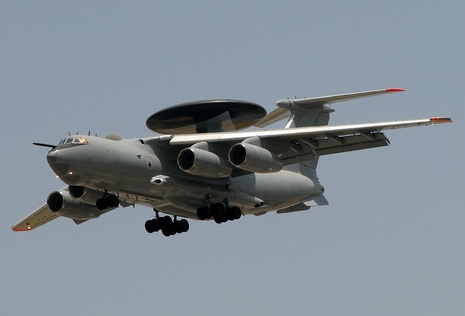
The indigenously designed and developed Kaveri Engine was successfully flight tested by DRDO yesterday during the Flying Test Bed (FTB) Trials at Gromov Flight Research Institute (GFRI), Moscow, Russia. The engine was tested from take-off to landing and flew for a period of over one hour up to at an altitude of 6000m at a speed of 0.6 mach in its maiden flight. The engine control, engine performance and engine health during the flight were found to be excellent.
Saturday, March 26, 2011
drdo's two decade programme kaveri engine tested successfully at russia and germany
Posted by Blogger Prince at 4:36 AM 0 comments
Labels: drdo's kauveri engine, k 10 engine, kauveri engine, latest engine developed for fighter jets, new fighter jet engine, new indian fighter jets
MAURITIOUS GOING TO HAND OVER TWO ISLANDS TO INDIAN NAVY FOR LISTENING POST

The two countries had briefly discussed the matter about five years ago, but the talks fell apart due to lack of full political support in Mauritius.
If India gets rights over the Agalega islands, it will mark a move towards the country having a footprint on another Indian Ocean island. Currently, New Delhi governs Andaman and Nicobar Islands and the Pamban island on the eastern Indian Ocean and Lakshadweep in the western part. Australia, France, Malaysia and Indonesia are other countries controlling islands in the Ocean. The US owns Diego Garcia in the Indian Ocean, which is used as a large military base.

Private participation is needed to develop the island as the cost of developing it into a premium tourist destination would set back the Mauritius government by a substantial amount.
Official statistics say the two islands have a combined land area of around 70 sq km, but the actual area is much less.

XAgalega is a two-island dependency of Mauritius in the western Indian Ocean. Copra and coconut oil are produced and...exported, and some poultry and cattle are raised and vegetables grown for subsistence. The principal villages are Vingt Cinq on North and Sainte Rita on South. There are few roads motor vehicles....
Posted by Blogger Prince at 12:00 AM 0 comments
Labels: INDIAN NAVY AT MAURITIOS, MAURITIOUS NAVY, NEW INDIAN NAVAL BASE AT MAURITIOUS, NEW NAVAL BASE FOR INDIAN NAVY NEAR AFRICA, NEW NAVAL COMMAND FOR INDIA
Friday, March 25, 2011
WAGAH BORDER PARADE
As the sun takes its last bow for the day, the joint checkpost at Wagah-the only road link between India and Pakistan-turns into a port of high-voltage patriotic fervour. The checkpost, roughly 23 km from Amritsar, comes alive with the beating retreat-a carefully choreographed drill by India's Border Security Force (BSF) on one side and the Pakistan Rangers on the other to mark the lowering of their national flags. The ceremony, since Partition, has over the years turned ostensibly hostile. A kilometre short of Wagah, roadside hawkers sell small national flags and sunshades in tricolour to the crowds heading for the visitors' gallery to watch the spectacle.IT IS FROM 6:15 AM TO 6:30 AM.

"Hail mother India!" is the cry from 8,000 Indians in a grandstand built beside the border gate, set amid green wheat fields. "We salute you mother!" they roar.
"Long live Pakistan!" several thousand Pakistanis shout back from the other side of tall iron gates guarded by soldiers with assault rifles. "God is greatest."
"OUR FLAG FLIES HIGHER"

Groups of Indian school girls break into dance in the stands and in the middle of the road as the music switches to a 1960s patriotic Bollywood song set to a modern tune.
Suddenly, a turbaned Sikh waving a large Indian flag charges towards the border gate, cheered on loudly by the thousands on the Indian side who have come to witness the daily spectacle, as if he was set to plant the flag on enemy territory.
"We have to tell them that our flag flies higher than theirs," said the man, Tejinder Singh, a trader from the nearby city of Jalandhar."We have to live in peace but I don't think that side wants peace,"
The Pakistani crowd is not to be outdone. A young bearded man, wearing a Muslim prayer cap, runs towards the Indian side waving the green national flag.
"Pakistan, Pakistan, Pakistan," the crowd roars.

The chanting reaches a crescendo as border guards dressed in ceremonial uniforms with tufted headgear begin a goose-step march to lower flags at the gate, stomping their boots with enough force to kick up dust on the asphalted road.
"The line between tourism and nationalism does not exist here," says a senior Indian officer.
"Military tensions are down and the soldiers are relaxed but it doesn't matter to the public. They get very excited."
Posted by Blogger Prince at 11:32 PM 0 comments
Labels: WAGAH BORDER PARADE, WAGAH BORDER PARADE TIME, WAGAH BORDER PARADE BY INDIAN FORCE, WAGAH BORDER PARADE SHOW
Thursday, March 24, 2011
INDIAN AWACS SYSTEM TESTED SUCCESSFULLY

"We have a very special defense relationship with India. It's now moving toward joint development of equipment. There are several new projects in the pipeline," Maj.-Gen. (res.) Udi Shani, head of the Defense Ministry's SIBAT Defense Export and Cooperation Agency said in an interview with the Indian press last week.

Israeli defense officials said that in the past decade, the countries have signed deals reaching a whopping $9b. "There is close cooperation and the Indians respect Israeli systems and our experience in fighting terror," one official said.
Another system India recently purchased from Israel is the aerostat radar to help defend the country against attacks like the ones in Mumbai in November in which the attackers infiltrated the city by sea. The radars will be deployed in strategic points to provide advance warning against incoming enemy aircraft and missiles. The deal is valued at $600m.
The EL/M-2083 Aerostat radars are a simpler version of the Green Pine radar, made by Israel Aerospace Industries, and used by the Arrow missile defense system. The phased-array radars are mounted on blimp-like balloons tethered to the ground and capable of detecting intrusions earlier than ground-based radar systems.
India's regional power ambitions are dependent on its ability to develop and produce, or procure, major weapon systems for use by its armed forces. Its recent economic resurgence has allowed the country to embark on major new defense projects, and infuse life into projects that were floundering because the country's ambitions had gotten ahead of its industrial and R&D infrastructure.

This document aims at providing a quick roundup of the major weapon systems being procured by India. I hope to start detailed knols on each of the projects in the days ahead.
The projects listed here include Indigenous R&D projects as well as outright purchases.
This is a work in progress document, and because of its nature will always remain so.
I intend to update it as frequently as new developments take place so that you can be sure of getting the latest status and news on the projects listed here.
Posted by Blogger Prince at 11:40 PM 0 comments
Labels: AWACS, INDIA GET'S FOURTH AWACS FROM ISRAEL, INDIAN AWACS, INDIAN AWACS SYSTEM TESTED SUCCESSFULLY, ISRAELI AWACS FOR INDIA, NEW AWACS FOR INDIA
IMPORTANTS OF AYANI AIR BASE FOR INDIAN DEFENCE

Two days before the Tajik president's visit, the India-Tajikistan joint working group (JWG) on counter-terrorism met in Delhi. At the JWG meeting, the two sides agreed on bilateral mechanisms
India's foray into Central Asia is also fueled by its interests in the region's vast gas reserves. India is among the actors in the "New Great Game" - the scramble for Central Asia's resources. Bedi points out that "though India remains powerless to engineer or overtly influence the 'New Game', its size, military and nuclear capability make it a not altogether insignificant part of the complex jigsaw puzzle".
Not surprisingly, India's "forward policy" in Central Asia has generated unease in Islamabad and Beijing. Pakistan has perceived India's air base at Ayni as part of the Indian attempt to "encircle Pakistan".
As for China, steps are afoot to counterbalance India's rising profile in Tajikistan. Stobdan points out that Chinese-Tajik cooperation is growing. Visits by senior Chinese leaders to Tajikistan have been followed up with generous military assistance to that country. While growing Chinese engagement with the Tajiks is perhaps motivated more by the increasing US presence in the region, India is no doubt a factor weighing on Chinese minds.

to exchange information on various aspects of terrorism, including the financing of terrorism, that affect their two countries. India also offered to provide Tajikistan with counter-terrorism training.
This cooperation is, however, just the tip of the iceberg. Less visible and more significant is the India-Tajik cooperation at Ayni Air Base, near the Tajik capital Dushanbe. Work on the base is expected to be completed next month, and the base will become operational by the year's end.
India's new friend the United States, however, is not very worried about Delhi's foray into Central Asia, as it sees India's growing profile there as a check on Russian and Chinese influence in the region.

India is constructing three hangars at Ayni, two of which will be used by Indian aircraft. India will station about 12 MiG-29 bombers there. The third hangar will be used by the Tajik air force. The Indian Air Force (IAF) is also stationing trainer aircraft under a 2002 defense-cooperation agreement whereby India has been training the Tajik air force.
Neither New Delhi nor Dushanbe officially admits to an Indian air base at Ayni. Delhi maintains that it is only renovating this base. The first reports of India's intentions surfaced in 2002, and speculation gathered momentum in 2003 and into April this year when reports indicated that India's base at Ayni would become operational by end-2006.
India and Tajikistan were on the same side during the Afghan civil war in the 1990s. Both opposed the Taliban regime in Afghanistan and backed the Northern Alliance. In the late 1990s, India set up a 25-bed hospital at Farkhor, near Afghanistan's northern border, where injured Northern Alliance fighters battling the Taliban were treated.

According to Rahul Bedi, Jane's Defense Weekly's correspondent in Delhi, India supplied the Northern Alliance with high-altitude-warfare equipment worth US$8 million. The Northern Alliance also received input on strategy from Indian "advisers". Technicians from the Aviation Research Center of the Research and Analysis Wing (India's external intelligence agency) repaired the Northern Alliance's Soviet-made Mi-17 and Mi-35 attack helicopters. It was out of Tajikistan that India channeled this help to the Northern Alliance.
It is Tajikistan's geographic location that has drawn India to this former Soviet republic. Tajikistan shares borders with China, Afghanistan, Uzbekistan and Kyrgyzstan. A narrow stretch of Afghan territory separates Tajikistan from Pakistan-administered Kashmir.
The significance of this region for India's security is immense. It is close to areas where scores of camps for jihadist and anti-India terrorist groups are based, and it is in the proximity of territory where Pakistan and China are engaged in massive military cooperation. Besides, Tajikistan is in Central Asia, a gas-rich region in which India has growing interests.
There are several reasons underpinning India's interest in a base at Tajikistan, one being the Pakistan factor. The Pakistani incursion at Kargil in 1999 laid bare the failure of Indian intelligence and opened India's eyes to the need for a military presence outside its borders, Phunchok Stobdan, research fellow at the Institute for Defense Studies and Analyses in New Delhi, told Asia Times Online. Such a presence in Tajikistan, India realized, would enable it to monitor anti-India activities in the region.
After the fall of the Taliban regime, India was determined not to lose the foothold it had gained in Afghanistan thanks to its ties with the Northern Alliance in the late 1990s. Delhi was anxious not to allow Pakistani influence to grow again in Afghanistan. This was behind India's decision to remain at Ayni/Farkhor after the fall of the Taliban, say Indian intelligence sources. A military base in Tajikistan is attractive as it also enhances India's options in the event of war with Pakistan. From Tajikistan, India would be able to strike Pakistan's rear.
It is its presence at Ayni that has enabled India to play a significant role in Afghanistan's reconstruction and stability since 2002. Since Pakistan does not allow India overland access to Afghanistan, India has had to channel its economic and relief assistance to Afghanistan through Farkhor. The IAF airlifts supplies to Ayni, which are then transported to Farkhor and onward to Afghanistan by road.
India's growing military profile in the region might have been prompted by the need to counter Pakistan's influence, but there is more to Ayni Air Base than India-Pakistan rivalry. A base at Ayni enables India to project power in Central Asia. It is testimony to the fact that India is no longer content with a geostrategic role in South Asia; its ambitions extend outside the region as well.
India has become the fourth power after Russia, the US and Germany to have a base in Central Asia. As a small but not insignificant player in the "New Great Game" in Central Asia, India announced that it had interests beyond its immediate neighborhood. With the air base at Ayni, India has signaled that it is a keen contestant in Central Asia's "great base race" as well.
Posted by Blogger Prince at 5:17 AM 0 comments
Labels: IMPORTANTS OF AYANI AIR BASE, INDIA AND TAJIKISTAN, INDIAN AIR BASE AT FOREIGN SOIL, INDIAN AIR FORCE STRENGTH, INDIAN'S RELATIONS WITH TAJIKISTAN, NEW INDIAN AIR BASES
Indian Navy’s Information Warfare squadron base INAS-310 ‘COBRA’ celebrated
Indian Navy’s Goa based based squadron, INAS-310 ‘COBRA’, celebrated its golden jubilee yesterday.
The squadron has two unit citations, over 80,000 hrs of flying, operations in – 1971 (East Pakistan), 1999 (‘Op Vijay’) and 2002 (‘Op Parakram’). Other operations that participated were Operation Vijay (Liberation of Goa) in December 1961, 1965 war (defend naval assets) against Pakistan, 1988 Operation Pawan (against LTTE) in Srilanka and 1988 Operation Cactus (maldives).
INAS 310 was commissioned by Nawab Ali Yavar Jung on 21 Mar 1961 in Heyres, France. The squardon was headed by Lt Cdr Mihir K Roy (later Vice Admiral). The squardon was commissioned on the French Aircraft carrier ‘Arromanches.’ The first Alize 1050 aircraft was handed over to India on 7th January, 1961 at a place called Villacoublay in France. The Cobra’s participated in a tactical excercise with Type-12 ships (INS Beas and INS Betwa). Both Alize and Type-12 (from UK) were newely acquired and were making their way to India.
The squadron operated from INS Vikrant being acquired from the UK. The COBRAs operated the Alizes from INS Vikrant for the next twenty six years ie till 10 May 1987. The Alizes saw action during the 1971 Indo-Pak war when the squadron’s aircraft flew extensively, remarkably, even by night. The squadron earned six Vir Chakras, six Nao Sena Medals and three mention-in-Despatches for these operations. Vice Adm M K Roy and Cmde RAJ Anderson, the pilot who carried out the first landing of the Alize on INS Vikrant were among the 100 odd veterans attending the ceremony.
With the induction of the Dornier 228, in 1991, the squadron transformed itself from a carrier borne ASW squadron to a shore based Maritime Reconnaisance and Electronic Warfare squadron . The squadron’s exploitation of the Electronic Suite on board, and demonstrated domain expertise, earned it the distinction of being called the ‘Information Warfare’ squadron of the Indian Navy.
The Information Warfare reputation of the squadron was such that the squadron’s services were requisitioned by the IAF and the Army for operations in the Western sector during the 1999 Kargil Operation. The squadron’s aircraft operated far from any sea and from IAF airfields all along the Western border.
It was during this period that the COBRAs moulted from the blue and white skin to the steel grey skin. As recounted by a COBRA, “one day as we were returning to the (IAF) airfield from a sortie, the airfield being camouflaged was quite invisible but the Naval Dornier with its sparkling White wings shone like a torchlight. Immediately thereafter the Dorniers were recalled to Goa and repainted to a dull grey in two days and repositioned in the forward airfields”. The squadron now operates only grey Dorniers.
The COBRAs earned another unit citation in 2002 for their stellar performance during Operation Parakram. The squadron later inducted the ‘Para’ version of the Dornier and has now expanded its repertoire to include para dropping of Marine Commandoes.
The COBRAs, currently commanded by Cdr Sanjay Chauhan.
The squadron is also hosting an International Seminar on ‘Airborne Maritime Intelligence, Surveillance and Reconnaisance (ISR)” on 22 Mar 11.
Posted by Blogger Prince at 4:51 AM 0 comments
Labels: indian navy squadrons, INDIAN NAVY SURROUNDED BY CHINESE, Indian Navy’s Information Warfare squadron base INAS-310 ‘COBRA’ celebrate, naval war ships, new indian navy
Wednesday, March 23, 2011
INDIAN ANTI TANK MISSILE NAG TESTED SUCCESSFULLY
Indian infantry formations urgently want a potent ATGM to handle Pakistani tank forces that now bristle with capable Ukrainian T-80 and Chinese T-85 tanks.
So confident is the army about the Nag that, even before trails are completed, it has budgeted Rs 335 crores for buying 443 Nag missiles, which will be manufactured at the public sector Bharat Dynamics Limited. The missiles will equip Reconnaissance and Support Battalions, mechanised units that locate and destroy enemy tanks.
In trials last summer six Nag missiles were fired at tanks 3-4 km away; each of them hit their target precisely. Next month the Nag must demonstrate its capability at its minimum range of 500 metres.
“Since the Nag travels at 230 metres per second, it has just 2 seconds to align itself to a target that is 500 metres away. But we are confident that the Nag will meet this requirement during the forthcoming trials”, the DRDL’s Officiating Director, Amal Chakrabarti, told Business Standard during a visit to the Hyderabad missile complex.
The Nag is a third-generation (Gen-3), “fire-and-forget” missile; once it is fired, its seeker automatically guides the missile to even a fast-moving tank. In earlier-generation missiles an operator had to guide it all the way, often exposing himself to enemy fire. The world has just a handful of “fire-and-forget” missiles, such as the American Javelin, and the Israeli Spike. The Javelin and the Spike are lighter missiles that can be carried by a soldier; the Nag is a heavier and more powerful missile designed to operate from vehicles and helicopters.

While the infrared seekers of the Javelin and the Spike can be jammed, the Nag’s optical guidance system makes it virtually jam-proof. The indigenous development of an imaging seeker, a highly complex and closely guarded technology, is the Nag’s greatest triumph.
Here’s how it works. Nag missile operators search for enemy tanks through thermal imaging telescopes, which see as well by night as they do by day. Picking up a tank, the operator locks the Nag’s seeker onto the target. A digital snapshot of the target is automatically taken, which serves as a reference image. As the Nag streaks towards the target, at 230 metres per second, the seeker takes repeated snapshots of the target; each one is compared with the reference image, and deviations are translated through on-board algorithms into corrections to the Nag’s control fins, which steer the missile precisely at the target.

This method of firing is termed “lock-on before launch” or LOBL. In the pipeline is an even more sophisticated method --- “lock-on after launch” or LOAL --- for the helicopter-mounted Nag, or HELINA, which can target a tank 7 kilometres away. Since the target will seldom be visible at such a distance, the missile operator launches the HELINA in the general direction of the target. As it flies towards the target, the Nag’s seeker downlinks to the missile operator images of the area ahead; after travelling 3-4 kilometers, i.e. after about 12-16 seconds, the operator will be able to identify enemy tanks. He will lock the seeker onto the tank he wishes to destroy, and the command will be uplinked to the missile in mid-flight. After that, the missile homes in onto the target and destroys it.
The Nag provides its operator with another important tactical advantage. The plume of burning propellant from the tail of most missiles gives away its flight path and allows the target to get behind cover. The Nag, in contrast, is visible only during the first one second of flight, when the missile’s booster imparts 90% of the momentum; after that, a sustainer maintains the missile’s speed, burning a smokeless propellant that is practically invisible.

Acceptance of the Nag missile into service will be a triumphant conclusion to the Defence R&D Organisation’s (DRDO’s) long-delayed, but eventually successful, Integrated Guided Missile Development Programme (IGMDP). Initiated in 1983 by then DRDO boss, Dr APJ Abdul Kalam, the IGMDP set out to develop five missiles: the Agni and Prithvi ballistic missiles; the Akash and Trishul anti-aircraft missiles; and the Nag ATGM. Only the Trishul will have failed to be accepted into service.
Posted by Blogger Prince at 5:32 AM 0 comments
Labels: INDIAN ANTI TANK MISSILE NAG, LATEST NAG TEST SUCCESSFUL, NAG, NEW MISSILE NAG, NEW NAG MISSILE