BLOGGER TEMPLATES AND TWITTER BACKGROUNDS �

Friday, April 8, 2011

INDIAN COUTER TERROROSM OPERATIONS AGAINST ISI AND LASHKAR E TOIBA-JAISHE MOHAMMAD THREAT


India's external counter-terrorism policies
India has been the victim of Pakistan-sponsored terrorism since the 1950s. In those years, Pakistan's ISI had supported the insurgent/terrorist groups in India's northeast region and provided them sanctuaries, training, arms and ammunition in the Chittagong Hill Tracts of the then East Pakistan. India's anxiety to stop this played an important role in its assistance to the people of East Pakistan to liberate themselves.

Since 1980, the ISI has been providing sanctuaries, training, arms and ammunition in Pakistan to religious terrorist groups operating in Punjab, J&K and other parts of India. It is also infiltrating the mercenaries of the Pakistani pan-Islamic jihadi organisations into India to promote cross-border terrorism.


India has taken up this issue with the US since 1992 and wants Pakistan declared a State sponsor of international terrorism under US laws and have punitive action taken against it. In 1993, the Clinton administration placed Pakistan on a watch list of suspected State sponsors of international terrorism for six months and forced Nawaz Sharif , who was then in power, to sack Lieutenant General Javed Nasir, then ISI's director-general, and other senior officers. This did not have any effect on the use of terrorism by the ISI.

Since 9/11, Pakistan's military-intelligence establishment has been collaborating with the US in taking action against Al Qaeda elements posing a threat to US nationals and interests. But it has not taken any action against cross-border terrorism directed against India and to destroy terrorist infrastructure in PoK and the Northern Areas.


After the attack by terrorists belonging to LET and JEM on the Indian Parliament in December 2001, India mobilised and deployed its Army on the border in response to public pressure for action against the terrorist infrastructure in Pakistani territory. In response to appeals from the US, UK and other friendly governments, India refrained from action against Pakistan. Under US pressure, Pakistan banned LET and JEM, but not HUJI and HUM, and arrested some of their leaders and cadres. They have since been released.

US officials themselves admit Pakistan has not implemented its assurances to the US that it would put a stop to cross-border terrorism in J&K. Despite this, the US is reluctant to act against Pakistan because of its cooperation in assisting the US in neutralising Al Qaeda elements who have taken shelter in Pakistan.


India has made it clear that there will be no question of any talks with Pakistan on the normalisation of bilateral relations till it stops cross-border terrorism, winds up the terrorist infrastructure in its territory and gives up the use of terrorism as a weapon against India.


India has also been greatly concerned over the use of Bangladesh territory by religious and non-religious terrorists operating against India. The non-religious terrorist groups continue to enjoy sanctuaries in the CHT. Of the religious terrorist organisations, HUJI has an active branch in Bangladesh. Some Al Qaeda elements, who escaped into Pakistan from Afghanistan, have found their way into Bangladesh, where they have been given shelter by HUJI.


There is active complicity between the ISI and its counterpart in Dhaka in this matter. The Bangladesh authorities have not been co-operating with India in taking effective action against the large-scale illegal immigration into India. However, keeping in view the otherwise good relations with Bangladesh, India has been trying to have these problems sorted out bilaterally at the political and diplomatic levels. But the progress so far has been disappointing.

Wednesday, April 6, 2011

INDIAN SAGARIKA MISSILE TESTD SUCCESSFULY

 DRDO may also be developing a 300-km submarine-launched ballistic missile, Sagarika, based on the Prithvi. The program is reported to have started in 1992 and was originally reported to involve adapting a ramjet engine to the missile to reduce the need for heavy oxidizers. India does not have a submarine configured for launching ballistic missiles. (1)

According to other reports, India is developing the Dhanush (Bow, as in "bow and arrow" not the bow of the ship) submarine launched ballistic missile. With a range variously estimated at between 300 km and 350 km, this missile which would be later deployed on surface warships. It is unclear whether this missile would be deployed on India's new nuclear missile submarine.


Danush is a medium range indigenously developed ship-launched missile exclusively developed for the Navy. The Dhanush project is sometimes considered the Naval version of the Prithvi, though this may represent a program analog rather than any technological relationship.


There are two versions of the 8.56 meter long Dhanush missile under development. One such version, having a range of 250 km. This short-range missile will be used as an anti-ship weapon. The Indian Navy is apparently seeking another variant of the Dhanush surface-to-surface ballistic missile that is capable of striking land targets within a range of 500 km. The longer-range missile will have propulsion fuel similar to its short-range version.


Testing of this missile was originally planned to begin in December 1998. The first flight test of the Dhanush was conducted on 11 April 2000 from INS Subhadra, close to the Orissa coast in the Bay of Bengal. The missile flew for only four seconds and broke into two pieces, barely managing to clear the ship. The launch was dubbed a "technology demonstrator" and several more missile tests may be required to make this weapon battle-worthy.

With the development of Dhanush still at an early stage, the debate on cruise versus ballistic missiles has revived within the Navy.

The precise relationship between the Dhanush and the Sagarika programs remains obscure. Given the evident similarities in their overall characteristics, Dhanush may simply be the new name for the original Sagarika system. However, since the Dhanush is reported by some sources to have a 350 km range, compared to the 250-300 km range of the Sagarika, the change in designation may reflect a design change.


Tuesday, April 5, 2011

INDIAN SUPERSONIC MISSIE BRAHMOS'S ADVANTAGES

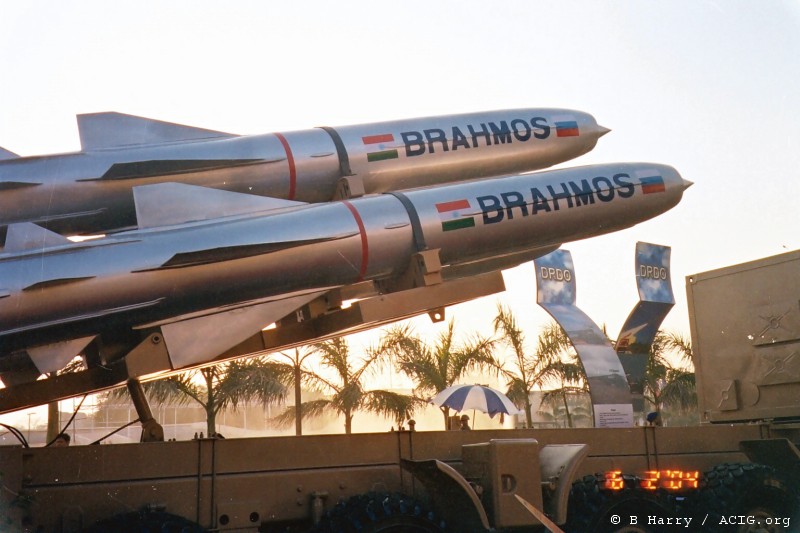
 China and Pakistan should pay attention to India’s newest anti-ship missile, the BrahMos. It is an anti-ship missile with a 660-pound warhead. It has a highly sophisticated ramjet engine, which speeds a three-ton missile to its target at Mach-3 speed.

In its initial flight trajectory it hugs the sea, making it impossible for jet fighters, anti-missile systems and rapid firing guns to stop it. In its terminal phase, it rises up to the sky and then drops on its prey like a giant harpoon. The missile’s high speed causes extensive damage to a ship on impact and the 660 pounds of explosives it carries cause the rest of the damage.

It can also be described as a sea-denial missile – denying an enemy access to the sea it defends.

The missile, originally called the Yakhont, was designed by the Soviets to kill U.S. aircraft carriers 200 miles away. In 1991 the United States expressed concern about its development and Russian President Boris Yeltsin, a U.S. friend at the time, shelved the project. This turned out to be India’s gain.

India took over the development work in 1998, agreeing to spend over US$250 million on the project. The Russian missile engine was married to an Indian guidance system in a 50:50 partnership, thus giving it the unique name of BrahMos, after India’s Brahmaputra River and Russia’s Moskva River.


The Chinese asked the Russians for similar collaboration on a similar missile system, but were flatly turned down. Instead the Russians equipped Chinese destroyers with Moskit class sea-skimming ramjet missiles. These are very capable missiles with a range of 90 to 150 kilometers. But these could neither be launched from aircraft nor have land-to-land use.

India expects about US$10 billion in orders for these missiles. The production line is gearing up to make 1,000 of these in various versions over the next ten years. If an additional export order for 1,000 more missiles is obtained the production line will have to be significantly expanded. Right now there no export orders – that will limit production to about 50-100 missiles a year.

A comparable missile in the U.S. inventory is the Tomahawk cruise missile, which has an extended range and larger explosive payload than others. But it is a subsonic missile, and thus can fall prey to fighter jets or anti-air or anti-missile system.

Collaboration between the Russians and Indians has produced a marvelous weapon. Future collaboration between the two nations is in the cards, in developing a fifth-generation fighter jet, a new tank design, etc. This is helpful to both countries. The Russians can defray the development costs and India gets a sophisticated weapon. Barring a few hiccups this collaboration will continue.


India has no intention of killing U.S. aircraft carriers, hence its development and operation were not questioned by the United States. On the other hand, a Chinese naval flotilla approaching the Indian Ocean on an aggressive mission would be fair game for this missile.

The same is true of any aggressive moves by the Pakistani Navy. The latter has always envisioned attacking India’s offshore oil and gas fields close to Mumbai, and repeating the Muslim destruction of India’s Somnath Temple on the Gujarat coast, 900 years back.

The version of the BrahMos that went into operation in 2005 is the naval version only. Another version, which can be carried by an aircraft or used in land-to-land combat, is still under development and should be operational in about three years.

Collaboration on the missile’s development was not easy. In 1998 the Russians were strictly following the guidelines of the Missile Technology Control Regime and would not export any missile technology beyond the 300-kilometer (186-mile) range. It also would not give India any help in building a sophisticated guidance system.


Hence this missile has a limited range of 290 kilometers (180 miles) and has an Indian guidance system. All testing and development since 1998 have been carried out in India, with the Russians as a 50-percent partner.

Beginning in 2002 when the missile first flew, it surprised most observers. Few thought that Russian-Indian collaboration could be successful and produce a weapon of that sophistication. Now it is a reality. Some Indian Navy ships are already equipped with it. Soon the air and land version will join the Indian forces, making them highly potent.

This technology acquisition and development was so important for India that the military went out of its way not to draw international attention. Technology transfer arrangements were such that no MTCR guidelines were broken.

Also in India’s neighborhood, Pakistan has acquired U.S. Harpoon and French Exocet missiles, and China has been buying Russian Sovremenny-class destroyers – hence India had to do something unique to put both China and Pakistan on the defensive. It appears that India has now achieved that task.

Although the missile is so successful, India was expecting other nations to order it. But no export orders have been received so far, despite an intense sales pitch over the last three years. None of the potential customers wishes to kill U.S. or other nations’ aircraft carriers; hence they do not need such a powerful weapon. Also, at US$2.5 million apiece the price is a bit steep. The original requirement of 1,000 missiles for the Indian and Russian navies still stands.


The future of this missile in Indian hands is very bright. It will permanently keep the Chinese navy out of the Indian Ocean. Closer to home, the belligerent Pakistan is unmindful of these developments. Their Harpoon missile inventory is very capable, but is subsonic and has a very limited range. The BrahMos, carried on ships and planes, can be fired from 200 miles away and hit its target with pinpoint accuracy.

The scramjet-powered BrahMos-2 will again be developed with Russian collaboration. That is the only way India will lay its hands on scramjet technology. The irony is that the MTCR will prevent its range from exceeding 300 kilometers.

This development work will take three years and will involve 20 Russian and Indian institutes and industrial units to finish the job. The only thing known about this newer missile, the BrahMos-2, is that it will fly at about Mach-5 to Mach-7 speed and will beat any known anti aircraft or anti-missile defense system.


It's a new cruise missile called the Brahmos. And it's what reportedly has Pakistan's defence planners scurrying to develop a land attack cruise missile, possibly a modified Harpoon missile acquired from the US in the 80s and 90s.

Brahmos combines the names of two rivers: the Brahmaputra and the Mosocow. It symbolises the close partnership that exists between India and Russia.

Here's why the Brahmos is considered the world's finest. It can fly at speeds of up to Mach 3, three times the speed of sound. It can destroy ships and targets on land. It can be launched from the air, submarines and onboard ships.

The Brahmos will be deployed on the Sukhoi 30 MKI, the mainstay of the Indian Air Force. The Sukhoi's ability to fly thousands of kilometres after being re-fuelled in-air means that the Brahmos can be used to strike targets across large parts of South Asia.

"It is the fastest and most precise cruise-missile in the world," affirms Pravin Pathak, Additional GM BrahMos Aerospace.

Today, with Russian assistance, and missiles like the Brahmos, the Indian Navy's frontline ships are fitted with the fastest and possibly most lethal anti-ship weapons ever developed

Sunday, April 3, 2011

INDIAN ANTI TANK WEPON HELINA TESTED SUCCESSFULLY


India's Defence Research & Development Laboratory (DRDL) plans to extend the range of the HELINA (Helicopter-mounted Nag) anti-armour missile into a >20-km range strike munition. HELINA project director KS Vara Prasad has indicated that his team is building a "miniaturised inertial navigation package" to enhance the existing weapon without adding weight or too much cost.

The HELINA, an air-launched variant of the Nag anti-tank missile, has a range of 7-km and has been captive flight-tested, with a scheduled first firing for later this year. The programme director has also revealed that a feasibility study is officially on to integrate the HELINA onto the Rustom-H MALE UAV. More details soon.
India's Defence Research & Development Laboratory (DRDL) plans to extend the range of the HELINA (Helicopter-mounted Nag) anti-armour missile into a >20-km range strike munition. HELINA project director KS Vara Prasad has indicated that his team is building a "miniaturised inertial navigation package" to enhance the existing weapon without adding weight or too much cost.

The HELINA, an air-launched variant of the Nag anti-tank missile, has a range of 7-km and has been captive flight-tested, with a scheduled first firing for later this year. The programme director has also revealed that a feasibility study is officially on to integrate the HELINA onto the Rustom-H MALE UAV
 

INDIAN NAVY ISSUED REQUEST INFORMATION FOR 50 UTILITY HELICOPTERS


India's navy has issued a request for information for at least 50 light utility helicopters to replace its fleet of Hindustan Aeronautics Chetaks.


The service is seeking a new fleet of twin-engines aircraft, with bidding companies to be required to undertake field evaluation trials in India. Interested vendors must also provide information on how they plan to comply with India's 30% offset rule, the navy says in its tender document.
 To meet its requirements, the selected light utility helicopter must have an all-up weight of not more than 4,500kg (9,920lb) and be capable of carrying at least one lightweight torpedo or two depth charges, the RFI says. There should also be a provision for mounting 12.7mm machine guns and/or a rocket launcher on either side of the aircraft.
 The helicopter must also be able to carry at least four passengers and come with rappelling equipment, rescue winches and be capable of carrying underslung loads.

Other roles for the new aircraft will include search and rescue, casualty evacuation, limited observation and surveillance and anti-submarine warfare tasks, as well as anti-piracy and anti-terrorism activities, the navy says.

The RFI document fails to provide a delivery timeline, but asks vendors to give the earliest schedule possible.

India's current Chetak design was licence-built by HAL, and is a version of the Eurocopter SA316B Alouette III. The aircraft has a maximum take-off weight of 2,200kg, according to HAL.

Flightglobal's HeliCAS database lists the navy as having an active inventory of 32 of the type.
Indian Navy is looking to acquire six to eight Medium-Range Surveillance Aircraft and High Altitude Long Range UAVs. Defence Ministry floated RFIs (request for information) for the surveillance aircrafts and UAVs newspaper reports indicated. Specifications for the Medium-Range Surveillance Aircraft require an operating range of over 350 nautical miles while the requirements for the UAV are service ceiling above 40,000 feet and endurance of over 25 hours.

These come in the aftermath of the 26/11 Mumbai Terror Attacks where Pakistan based terrorists used the sea route to reach Indian soil. India is also conducting a major upgrade for the Coast Guard.

Saturday, April 2, 2011

INDIAN AWACS (AEW&C)SYSTEM TESTED SUCCESSFULLY


The Rs 1800-crore programme, taken up by Defence Research Development Organiastion (DRDO), was first sanctioned in 2004 but suffered delay due to various reasons.

The roll out ceremony was witnessed by Dr VK Saraswat, Scientific Advisor to Defence Minster, Dr Prahlada, CC R and D (Ae and SI); Dr S Christopher, Director, CABS; Air Marshal Daljit Singh, AVSM, VM, DG(AO), IAF and many senior officials from Indian Embassy and M/s Embraer, a DRDO release said today.

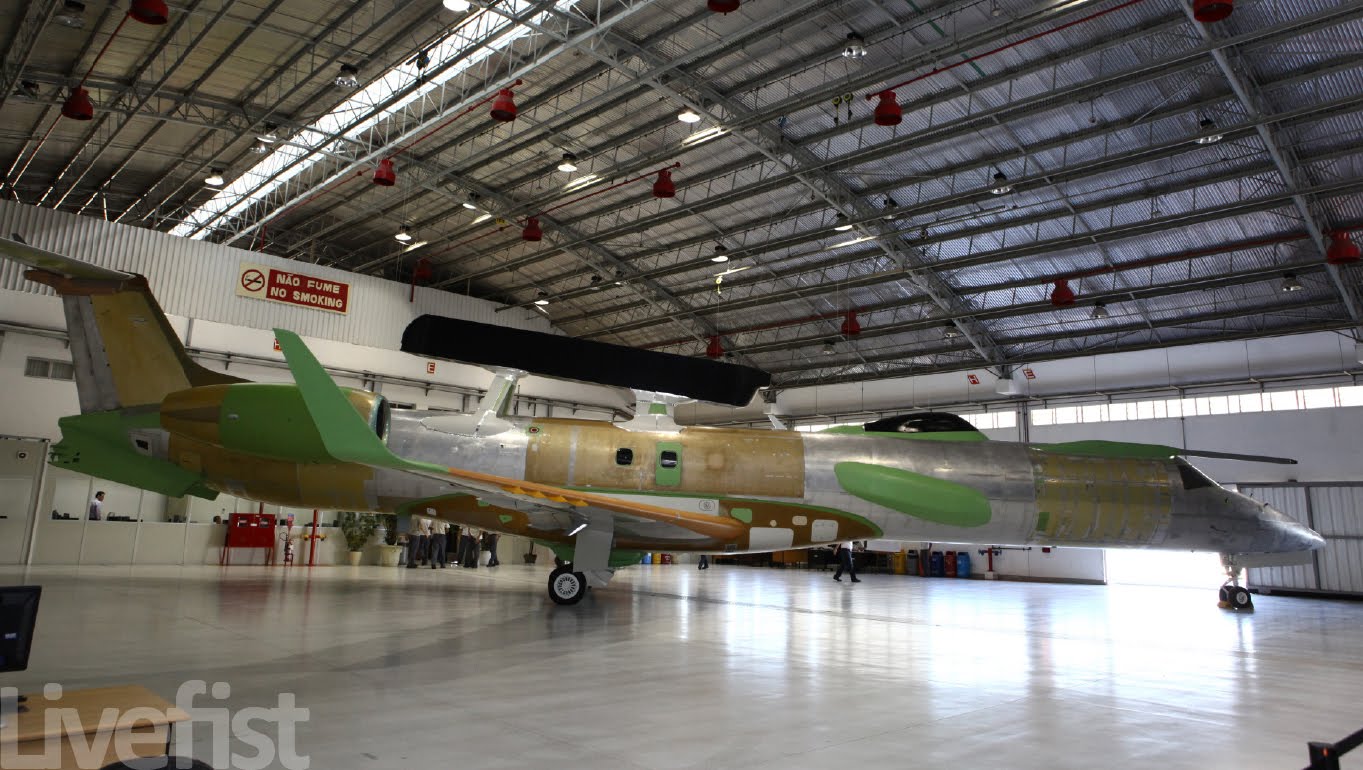
Country's own AWACS system, named Airborne Early Warning and Control System (AEW and C), will be built on a modified Embraer EMB-145 aircraft.
EMB-145I aircraft modified for AEW&C System rolled out at Embraer, Brazil on 21 Feb 2011. The roll out ceremony was witnessed by Dr VK Saraswat, SA to RM; Dr Prahlada, CC R&D(Ae & SI); Dr S Christopher, Director, CABS; Air Marshal Daljit Singh, AVSM, VM, DG(AO), IAF and many senior officials from Indian Embassy and M/s Embraer.

Based on the Embraer ERJ 145 regional jet, the aircraft features an in-flight refueling system, SATCOM capability, a significant increase in electrical and cooling capacities, and a comprehensive set of aerodynamic and structural changes. These improvements will allow the installation of the advanced electronic systems currently being developed by India’s Defence Research & Development Organisation (DRDO) under CABS (Centre for Airborne Systems) coordination.


Following its official presentation, the aircraft will start intensive ground and flight tests. The ferry flight to India is scheduled for the second semester of this year, where it will receive the equipment being developed by the DRDO.

Today, four Embraer Legacy 600 jets are operated by the Indian Air Force (IAF) for the transportation of Indian VIPs and foreign dignitaries, and a fifth Embraer Legacy 600 is in service with the Border Security Force (BSF), under India’s Home Ministry.

Friday, April 1, 2011

NEW MULTI ROLE TRANSPORT AIRCRAFT WILL BE READY SOON FOR INDIA

Mr Vladimir A Belyakov, Deputy Director General of the United Aircraft Company (UAC), told India Strategic after the signing of the bilateral agreement between the two countries on producing this medium category twin-engine aircraft that it should take about a year to do the preliminary design and another one and a half years to do the detailed design.
The first flight of the aircraft could be held in about seven years, say 2017 and regular production a couple of years later.
Mr Belyakov, who headed the Russian delegation at the signing ceremony Sep 9, said that the MTA would be a typical military aircraft, capable of short landings and takeoffs and ferrying 80 fully equipped troops, or infantry fighting vehicles like the Soviet origin BMPs and equivalent western systems, artillery pieces and ammunition and also for executing battlefield medical evacuations.
The aircraft would also be useful in natural disaster relief missions.
It would be designed to replace India’s 100-plus Soviet vintage AN 32 aircraft, which are now under overhaul and upgrades in Ukraine. The first AN 32 had arrived in India in 1984.
Mr Ashok Nayak, Chairman of the Hindustan Aeronautics Limited (HAL), headed the talks and the signing ceremony from the Indian side. The two countries have pooled in $ 300.35 million each to develop the aircraft.
Mr Nayak told India Strategic that India would acquire 45 aircraft while Russia 100. There would be scope for exporting this aircraft, and the plan is to produce a total of 205 aircraft.
But significantly, the two countries would share the design and production responsibilities also on 50:50 basis.
The aircraft will have a glass cockpit for electronic instrument displays, fly by wire controls, full authority digital engine control (FADEC) engines, 800 kmph cruise speed, and a range of 2500 km. The service ceiling would be 12 km.
India’s Cabinet Committee on Security (CCS) cleared the contribution for HAL in August while the Russian government had done this earlier for giving its share through the UAC and Rosoboronexport (ROE), the latter being the sole state-run arms trading Russian company.
Asked if the aircraft would carry any prefix like IL or Ilyushin, Mr Belyakov said that the company would be called MTA Ltd, and the aircraft also simply as MTA.
The joint company would be based in Bangalore.
The Charter documents were signed by Mr N C Agarwal, HAL’s Director Design and Development, and from the UAC side by Mr Velmo Zhkin Sergey.
It may be noted that Russia has maintained its traditional Soviet days lead in supplying military aircraft to India. Over nearly last one and half decades, it has won orders for supplying nearly $ 20 billion worth of aircraft, systems and support elements including maintenance and upgrades for 272 SU 30 MKI combat jets, 139 Mi 17 V5 helicopters, and upgrades for SU 30 as well as old Mig 21bis and Mig 29 aircraft.
The two countries had signed the Inter-governmental Agreement for the MTA project in November 2007 after a visit of Defence Minister A K Antony to Moscow.


Images Copyright Ilyushin


The IRKUT Corporation proudly presents the programme of the Indo-Russian Transport Aircraft. The international project on joint development, production and sales of twin-turbofan Tactical Transport Aircraft envisions solidary cooperation of the Hindustan Aeronautics Limited (India), the IRKUT Corporation and the Ilyushin Aviation Complex (Russia), with their design teams to be merged into a virtual enterprise. 

The programme of Tactical Transport Aircraft development will significantly broaden the horizons of Indo-Russian military-technical cooperation. While implementing this innovative programme, Russian and Indian engineers will acquire invaluable experience and expertise in joint creation of the top-of-the-line aviation product. 

For the first time, the airlifter is being co-developed by both countries on a parity basis without governmental financing with the project's cost of nearly USD 300 … 400 mln. The IRKUT Corporation plays a key role of major investor (40% of project expenses) and coordinator of the Russian side. 

By 2015-2020 this transport aircraft with up to 18.5-t carrying capability is supposed to replace aging fleet of the An-12, An-26, C-130. Indian Air Force plans to acquire 45 Tactical Transport Aircraft. Additionally Russian market will demand nearly 100 transport aircraft within next 12 years.